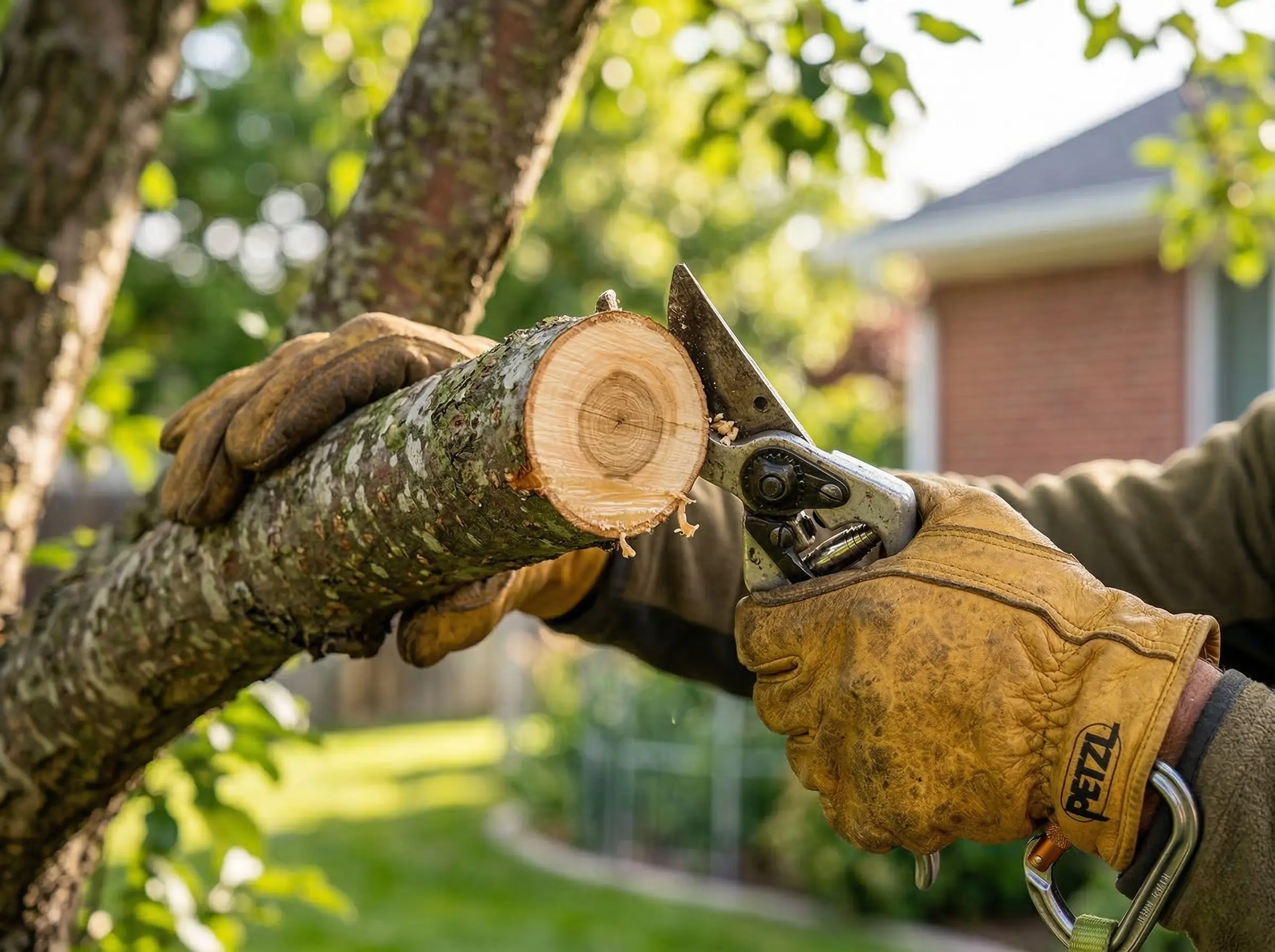
There's a pear tree in a backyard off Garrity Boulevard in Nampa that hasn't been pruned in at least 12 years. The canopy is a dense tangle of crossing branches, water sprouts, and deadwood. Fruit production dropped to almost nothing three years ago. Last summer, a main scaffold branch loaded with pears split off and took a section of fence with it.
The homeowner, Janet, called us thinking the tree was dying. It wasn't dying. It was suffocating. Twelve years of unpruned growth had created a canopy so dense that air couldn't circulate, light couldn't penetrate, and the branch structure couldn't support its own weight. We spent half a day restoring it: removing deadwood, thinning the interior, reestablishing the open center form, and reducing weight on overextended limbs. By the following summer, the tree was producing again.
That's what happens when fruit trees don't get pruned. And in the Treasure Valley, where fruit trees are everywhere (especially in Nampa and Caldwell with their orchard heritage), it happens a lot.
This guide covers when to prune, how to prune, and what happens when you don't. If you've got fruit trees on your Boise property, this is the most valuable maintenance you can do for them.
Want a pro to handle it? Get a free estimate.
In this article
When to Prune Fruit Trees in Boise
Timing matters. Prune at the wrong time and you invite disease, reduce fruit production, or stress the tree heading into the wrong season.
The Best Window: Late February Through Early March
For most fruit trees in the Treasure Valley, late winter is the ideal pruning window. The tree is still dormant, so it won't bleed excessive sap. You can see the entire branch structure clearly without leaves in the way. And spring growth is right around the corner, so pruning cuts heal quickly.
In Boise, that window is typically the last two weeks of February through the first two weeks of March. Watch the weather. If we get a late cold snap (below 15 degrees F), hold off on pruning until temperatures moderate. Fresh pruning cuts on a hard freeze can cause bark cracking.
Timing by Species
| Fruit Tree | Best Pruning Time | Notes |
|---|---|---|
| Apple | Late Feb – early March | Prune while dormant, before bud break |
| Pear | Late Feb – early March | Same as apple, but go lighter (pears are fire blight prone) |
| Cherry (sweet) | Late Feb – early March | Or right after harvest in July |
| Cherry (sour/pie) | Late Feb – March | Dormant season only |
| Plum | Late Feb – March | Avoid fall pruning (silver leaf disease risk) |
| Peach/Nectarine | Early March | Wait until you can see pink bud tips, then prune |
| Apricot | Late Feb | Earliest of the stone fruits to bloom; prune before buds swell |
When NOT to Prune
Fall. Pruning in September or October stimulates new growth that won't harden off before winter. The new growth freezes, dies back, and creates entry points for disease. Fall pruning also increases the risk of silver leaf disease in plums and cherries.
During wet spring weather. Fire blight bacteria spread through rain splash and enter through pruning cuts. If your pear or apple tree is actively flowering and it's raining, don't prune. Wait for a dry stretch.
Mid-summer (for most species). Summer pruning has its place for size control, but heavy structural pruning during the growing season removes too much energy-producing foliage and stresses the tree. The exception is sweet cherries, which can be pruned right after harvest.
How to Prune Fruit Trees: The Basics
Open Center vs. Central Leader
These are the two main structural forms for fruit trees, and knowing which one your tree should have determines how you prune it.
Open Center (Vase Shape)
Used for: peach, nectarine, plum, apricot, sour cherry
The goal is 3 to 5 main scaffold branches radiating outward from the trunk at roughly 18 to 36 inches above ground, with no dominant central leader. The center of the tree stays open for light and air circulation. Think of an upside-down umbrella.
Central Leader (Modified)
Used for: apple, pear, sweet cherry
The tree keeps one dominant vertical leader with lateral scaffold branches spaced along it, getting shorter as you go up (like a Christmas tree shape, but looser). This form produces more fruit and better supports heavy crop loads on apples and pears.
The Four Cuts That Matter Most
You don't need to be a certified arborist to do basic fruit tree pruning. But you do need to know which cuts make a difference.
1. Remove dead, diseased, and broken wood first.
This is the easiest and most impactful step. Cut out anything dead, anything with canker or discoloration, and anything broken. Sterilize your tools between cuts on diseased wood (rubbing alcohol or 10% bleach solution).
2. Remove crossing and rubbing branches.
When two branches rub against each other, both get wounded. Wounds invite disease. Remove the weaker or less well-positioned branch.
3. Thin the interior for light and air.
Fruit needs sunlight to ripen properly and air circulation to prevent fungal diseases. Remove inward-growing branches and water sprouts (the vigorous vertical shoots that grow straight up from scaffold branches). Don't remove all water sprouts. Leave a few well-placed ones that can be trained into productive branches.
4. Reduce length on overextended branches.
Branches that extend too far from the trunk get heavy when loaded with fruit and snap. Shorten them back to a well-placed lateral branch or outward-facing bud.
How Much to Remove
The rule of thumb: don't remove more than 25% of the canopy in a single year. Removing too much triggers a stress response. The tree pushes out a flush of water sprouts to compensate, which creates a maintenance headache the following year.
For a tree that's been neglected for many years (like Janet's pear tree), restoration pruning takes 2 to 3 years. Take out the worst problems in year one, refine in year two, and fine-tune in year three. Patience produces better results than trying to fix everything at once.
Common Fruit Tree Problems in Boise
Fire Blight on Apples and Pears
Fire blight and other fruit tree diseases are the most serious threats affecting fruit trees in the Treasure Valley. It's a bacterial infection that causes branch tips to bend over in a "shepherd's crook" and leaves to turn black, like they've been scorched.
Prevention through pruning: Open up the canopy for air circulation. Remove water sprouts that create dense, humid conditions. Avoid heavy nitrogen fertilization that promotes the soft new growth bacteria love.
If you see it: Prune infected branches at least 12 inches below the visible infection during dry weather. Sterilize tools between every cut. If the infection has reached the main trunk, the tree may need removal.
Neglect and Overgrowth
We see this more than any other issue, particularly on properties in Nampa and Caldwell where old orchard trees were absorbed into residential neighborhoods. The symptoms: dense tangled canopy, little to no fruit production, broken branches from unsupported weight, and fungal problems from poor air circulation.
The fix is restoration pruning over 2 to 3 years. It's not expensive ($200 to $400 per session for a standard residential fruit tree) and the improvement in fruit production and tree health is dramatic.
Iron Chlorosis in Fruit Trees
Some fruit tree species (particularly peach and certain apple rootstocks) struggle with Boise's alkaline soils. Yellowing between the veins is the sign. Read more about iron chlorosis treatment.
Borer Damage
Peach tree borers and flatheaded borers target stressed fruit trees in the Treasure Valley. Signs: sawdust-like frass at the base of the trunk, gummy sap oozing from holes, and bark that feels spongy or separates easily. Healthy, well-pruned trees resist borers much better than stressed ones. If you're planting new fruit trees, see our guide on choosing fruit trees for Boise that resist these issues.
DIY vs. Professional Pruning
When DIY Is Fine
- Young trees under 10 feet tall that you can reach from the ground
- Basic deadwood removal on any size tree (if you can reach it safely)
- Removing water sprouts and suckers at the base
- Light thinning of interior growth
Tools you need: Sharp bypass hand pruners (for branches under 3/4 inch), loppers (for 3/4 to 1.5 inch branches), and a pruning saw (for anything larger). Keep them sharp and clean.
When to Call a Pro
- Trees taller than 12 to 15 feet (ladder + pruning tools = high risk)
- Major structural work (removing large scaffold branches, correcting form)
- Restoration pruning on neglected trees (requires knowing what to keep)
- Anything involving a chainsaw
- Disease identification and treatment decisions
- Trees near power lines, structures, or fences
A professional fruit tree pruning typically runs $150 to $400 per tree depending on size and condition. For a standard backyard apple or pear tree, most jobs fall in the $175 to $275 range. That's an annual investment that pays for itself in better fruit, fewer pest problems, and avoiding the $1,500+ removal bill when a neglected tree fails.
Schedule a free estimate for fruit tree pruning.
Fruit Tree Pruning Schedule for Boise
Here's a simple annual calendar:
| Month | What to Do |
|---|---|
| January | Plan. Assess trees while dormant. Identify problems. |
| Late Feb – March | Main pruning window. Structural pruning, thinning, deadwood removal. |
| April – May | Watch for fire blight as trees bloom. Remove infected branches immediately. |
| June | Light summer thinning if needed. Thin fruit clusters on apples (one fruit per cluster for best size). |
| July | Post-harvest pruning on sweet cherries. Monitor for pests. |
| August – September | Leave trees alone. Let them harden off for winter. |
| October – November | Clean up fallen fruit and leaves (reduces overwintering disease). |
| December | Dormant spray (horticultural oil) for scale and mite eggs if needed. |
FAQs: Fruit Tree Pruning in Boise
How often should I prune my fruit trees?
Every year. Fruit trees aren't like shade trees that can go 3 to 5 years between pruning. Annual pruning maintains structure, improves fruit quality, prevents disease, and keeps the tree manageable. Skip a year and you'll spend twice as long catching up the next.
My fruit tree hasn't been pruned in years. Can it be saved?
Usually, yes. Restoration pruning over 2 to 3 years can bring most neglected fruit trees back to productive health. The key is not trying to fix everything in one session. Remove no more than 25% of the canopy per year. Year one handles the worst problems. Year two and three refine the structure.
Should I seal pruning cuts with tree paint?
No. Research has shown that wound sealants don't help and can actually slow the tree's natural healing process. Make clean cuts at the branch collar and let the tree compartmentalize the wound on its own.
When should I prune my peach tree in Boise?
Early March, when you can see pink bud tips swelling but before they open. Peaches bloom early in the Treasure Valley, so the window is short. Pruning too early risks freeze damage to exposed cuts. Pruning too late removes developing fruit buds.
Can I prune fruit trees in summer?
Light pruning, yes. Removing water sprouts, suckers at the base, and diseased wood is fine any time. Major structural cuts should wait for the dormant season. The exception is sweet cherries, which respond well to post-harvest pruning in July.
How much does professional fruit tree pruning cost in Boise?
$150 to $400 per tree depending on size and condition. Most standard residential fruit trees (apple, pear, cherry) fall in the $175 to $275 range. Multi-tree discounts are common when you have several done at once. Get a free estimate.
Your Fruit Trees Are Worth the Annual Investment
A well-pruned fruit tree produces more fruit, better fruit, and fewer problems. It looks better in your yard and it'll be productive for decades.
Late February is coming. If your fruit trees haven't been pruned this year, now's the time to schedule it.
Get Your Free Estimateor call (986) 202-7387