That maple in your front yard has been dropping leaves in July. Not a few stragglers. Handfuls. And the ones still hanging on look pale, spotted, curled at the edges.
You Google "sick tree" and get 200 million results telling you it could be anything from root rot to not enough water. Helpful.
Here's the thing: most Boise homeowners wait too long to get a tree health assessment. They watch for dying tree signs for a season or two, hoping the tree bounces back. Sometimes it does. But when it doesn't, you're looking at a dead tree removal that costs three times what early treatment would have run.
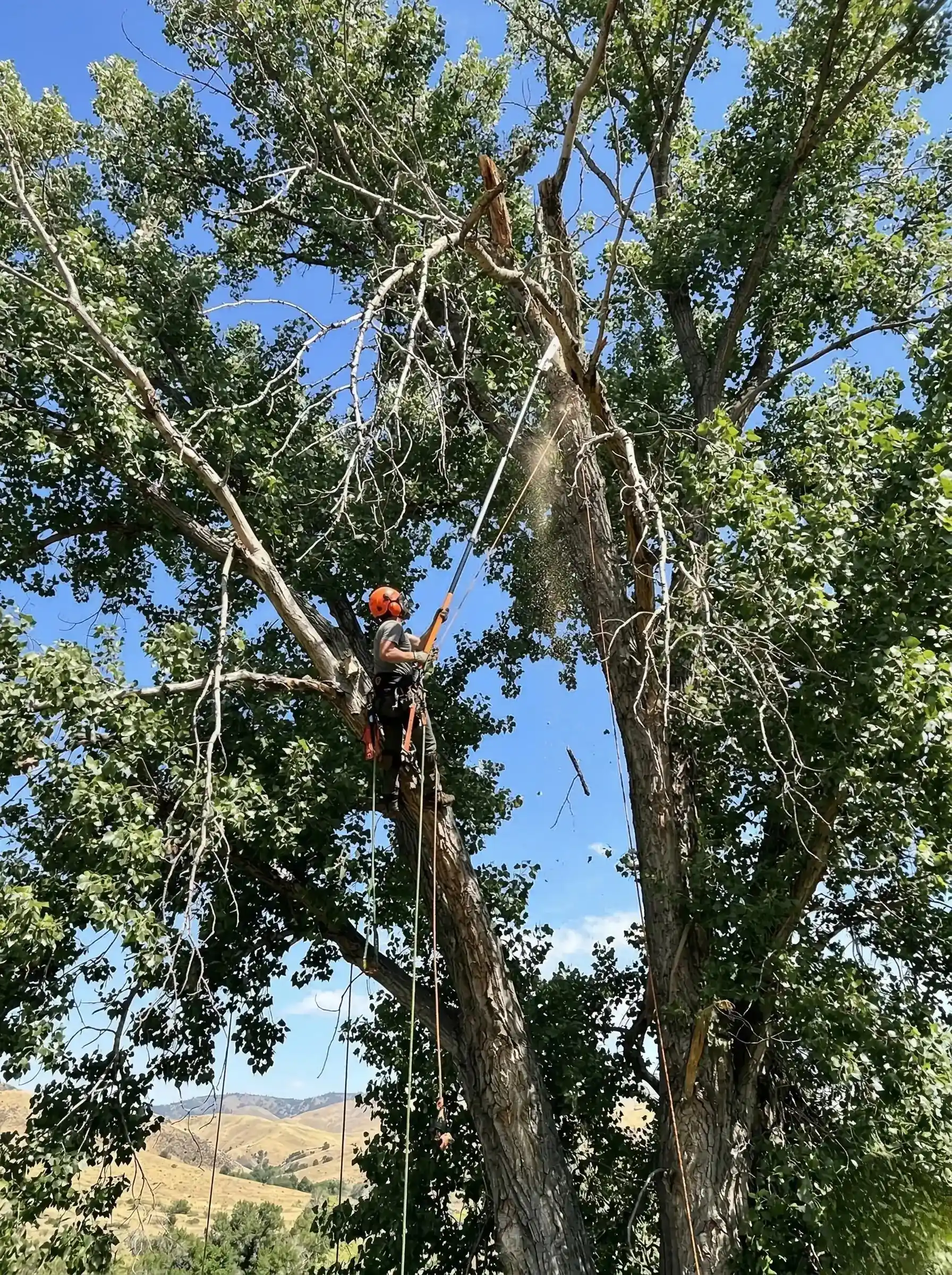
At Boise Tree Pros, our International Society of Arboriculture (ISA)-certified arborists assess trees across the Treasure Valley every week. Some trees need treatment. Some need pruning. Some need to come down. The point of an assessment is to figure out which category yours falls into before the tree makes the decision for you.
In this article
Warning Signs Your Tree Needs a Health Assessment
Not every brown leaf means your tree is dying. Trees drop leaves, lose bark, and go through rough patches. That's normal. But some signs point to real trouble.
Call an arborist if you notice any of these:
- Mushrooms or fungal growth at the base. Mushrooms growing around the trunk or root flare usually mean internal decay. The tree might look fine above ground while rotting from the inside out.
- Bark falling off in large sections. Small bark shedding is normal for some species (birch, sycamore). Large sections of missing bark exposing smooth or discolored wood underneath is not.
- Dead branches in the upper canopy. A few dead twigs are normal. Multiple large dead branches, especially at the crown, signal serious decline. Arborists call this "dieback" and it's one of the clearest red flags.
- Leaning that wasn't there before. A tree that's always leaned 5 degrees is probably fine. A tree that started leaning this year, especially after a storm, has a root problem. That's urgent.
- Leaves dropping or changing color out of season. Yellowing leaves in July. Brown spots in May. Leaves that are half the normal size. These all suggest the tree's vascular system is compromised.
- Cracks or splits in the trunk. Vertical cracks in the main trunk can indicate internal structural failure. If the crack opens and closes with the wind, the tree needs immediate evaluation.
- Carpenter ants or boring insects. Sawdust piles at the base, small round exit holes in the bark, or visible insect activity means something is eating your tree from the inside.
Concerned about a tree on your property? Request a free assessment and we'll tell you exactly what's going on.
What an Arborist Checks During a Tree Health Assessment
An arborist tree health assessment is a systematic, top-to-bottom evaluation of a tree's structure, root system, canopy, and surrounding environment to identify disease, pest damage, nutrient deficiency, or structural risk. It's not just looking at the tree and saying "yep, that's sick." A certified arborist follows a structured process to evaluate the whole tree, from roots to canopy.
Visual Inspection (Every Assessment Starts Here)
The arborist walks the entire tree, looking at:
- Root zone. Soil heaving, exposed roots, fungal growth, grade changes, root damage from construction or compaction.
- Trunk. Cracks, cavities, cankers (dead sections of bark), lean, bark condition, signs of boring insects.
- Branch structure. Dead limbs, crossing branches, included bark unions (weak V-shaped joints), weight distribution, broken hangers.
- Canopy. Leaf color, density, size, early drop, unusual growth patterns, dieback progression.
- Surrounding area. Nearby construction, grade changes, irrigation issues, competition from other trees, soil compaction from foot traffic or vehicles.
Diagnostic Tools (When Visual Isn't Enough)
- Resistograph or sonic tomography. Measures wood density inside the trunk. Finds internal decay that you can't see from outside.
- Soil testing. Checks pH, nutrient levels, compaction, and drainage. Boise soils tend to be alkaline (high pH), which causes iron chlorosis in certain tree species, especially red maples and pin oaks.
- Increment boring. A small core sample from the trunk reveals growth ring patterns, internal discoloration, and decay columns.
- Lab samples. Leaf, bark, or root samples sent to a diagnostic lab for pathogen identification.
The Assessment Report
A professional assessment results in one of these recommendations:
- Monitor. The tree has minor issues but isn't in danger. Check again next season.
- Treat. Specific treatment recommended (pruning, soil amendment, pest treatment, cabling).
- Remove. The tree is too far gone or poses a safety risk. Professional removal is the safest option.
Common Tree Diseases and Pests in Boise, Idaho
Boise's climate creates specific problems. Hot, dry summers stress trees. Alkaline soils limit nutrient uptake. And a growing list of pests keeps arborists busy.
Fungal Diseases
- Verticillium wilt. One of the most common tree diseases in Idaho and the top tree killer in Boise. Affects maples, elms, ash, and dozens of other species. Symptoms include wilting branches, leaf scorch on one side of the tree, and progressive dieback. There's no cure — severely infected trees need removal.
- Fire blight. Hits ornamental pears, crabapples, and mountain ash hard. Branches look scorched. Affected limbs curl into a "shepherd's crook" shape. Prune infected branches 12 inches below visible damage. Our fruit tree pruning guide covers prevention techniques for health issues like fire blight.
- Cytospora canker. Common on spruce, cottonwood, and aspen in the Treasure Valley. Look for sunken, discolored patches on bark with sap oozing from the edges.
- Root rot (Armillaria and Phytophthora). Both thrive in overwatered or poorly drained soil. Mushrooms at the base are the telltale sign. By the time you see them, the root system is already compromised.
Insect Pests
- Emerald ash borer (EAB). Idaho's biggest tree threat. EAB hasn't been confirmed in Boise yet, but it's been found in neighboring states. If you have ash trees, get them assessed now. Preventive treatments exist, but they need to start before the beetle arrives.
- Bronze birch borer. Already active in parts of the Treasure Valley. Targets birch trees stressed by heat and drought. D-shaped exit holes in the bark and crown dieback starting at the top are the classic signs.
- Spider mites. Thrive in Boise's hot, dry summers. Cause stippled, yellowed leaves on many species. Usually treatable with horticultural oils if caught early.
- Aphids. Practically every tree in Boise gets aphids at some point. Heavy infestations cause sticky honeydew and sooty mold on leaves.
Nutrient Deficiency
Iron chlorosis is extremely common in Boise due to alkaline soil. Leaves turn yellow between the veins while veins stay green. Mostly affects red maples, pin oaks, and river birch. Trunk injections, soil acidification, or switching to alkaline-tolerant species are the options. Our guide on choosing disease-resistant trees for Boise can help you pick the right replacement.
How Much Does a Tree Health Assessment Cost in Boise?
Most tree health assessments in Boise run between $75 and $250, depending on what's involved. For a full pricing breakdown across all tree services, see how much a health assessment costs.
| Assessment Type | Typical Cost | What's Included |
|---|---|---|
| Basic visual assessment (1–3 trees) | $75–$150 | Walk-around inspection, verbal recommendation, written summary |
| Detailed assessment with report | $150–$250 | Thorough inspection, written report, treatment plan, photos |
| Diagnostic testing (soil, lab) | $200–$400+ | Basic assessment plus soil testing, lab samples, detailed analysis |
| Emergency hazard assessment | $100–$200 | Urgent safety evaluation, immediate recommendation |
| Full property assessment (5+ trees) | $200–$500 | Every tree on the property evaluated and documented |
What affects price:
- Number of trees. Most arborists discount multi-tree assessments.
- Report detail. A verbal "your tree is fine" costs less than a documented report with photos and treatment recommendations.
- Diagnostic tools. Resistograph testing, soil analysis, and lab work add cost but give definitive answers.
- Purpose. Assessments for real estate transactions, legal disputes, or insurance claims require more formal documentation.
Many Boise tree companies, including ours, offer free basic assessments. If you just need to know "is my tree OK or not," a quick visit can answer that without cost. Detailed reports with documentation are where fees come in.
Want to know what's going on with your trees? Get a free estimate or call (986) 202-7387.
Treatment Options: Saving Your Tree vs. Removing It
Not every sick tree needs to come down. Many can be treated and brought back to health if you catch the problem early enough.
When Treatment Makes Sense
- The problem is identified early — a tree with 20% canopy dieback from a treatable fungal infection has good odds. A tree with 60% dieback does not.
- The species responds to treatment. Some diseases have effective treatments. Others don't. Verticillium wilt? No cure. Fire blight? Treatable with pruning. Iron chlorosis? Manageable with injections.
- The tree is structurally sound. A tree with internal decay and a disease on top isn't worth treating.
- The tree has value. A mature shade tree worth $5,000–$15,000 in property value is worth spending $300–$500 to treat.
Common Treatments
- Pruning. Removing dead, diseased, or damaged wood improves air circulation and eliminates infection sources. Professional pruning is the first-line treatment for many tree health issues.
- Soil amendment. Adjusting pH, improving drainage, decompacting soil, and adding organic matter can resolve nutrient deficiency and root stress.
- Trunk injections. Direct injection of nutrients, fungicides, or insecticides into the tree's vascular system. Fast-acting and targeted. Used for iron chlorosis, Dutch elm disease, and preventive EAB treatment.
- Pest treatment. Horticultural oils, systemic insecticides, or biological controls depending on the pest. Timing matters — most treatments work best at specific points in the pest's life cycle.
- Cabling and bracing. A structural solution for weak unions or heavy limbs that could fail.
When Removal Is the Right Call
- More than 50% of the canopy is dead
- The trunk has extensive decay or large cavities
- Root rot has compromised the root plate
- The tree is leaning and the lean is getting worse
- Treatment costs exceed the tree's value
- The tree poses a safety risk to people or structures
If removal is the answer, you'll also want to consider stump grinding afterward. A leftover stump attracts carpenter ants and becomes a tripping hazard.
DIY Tree Health Checks: What You Can Do Yourself
You don't need an arborist for every concern. Here are checks any Boise homeowner can do:
The 5-Minute Walk-Around
Do this every spring and after major storms:
- Look up. Dead branches? Hanging broken limbs? Thin spots in the canopy where it used to be full?
- Look down. Mushrooms at the base? Soil heaving or cracking? Exposed roots that weren't visible before?
- Look at the trunk. New cracks? Missing bark? Sawdust piles? Sap oozing from holes?
- Check the leaves. Right color for the season? Right size? Any spots, curling, or early drop?
- Push test. For smaller trees, push gently on the trunk. If you feel movement at the base, the root system may be compromised.
Scratch Test
Not sure if a branch is dead or just dormant? Scratch a small section of bark with your thumbnail. Green underneath means alive. Brown or dry underneath means dead.
When to Stop DIY and Call a Pro
- You found mushrooms at the base (potential root rot — a fall hazard)
- Large branches are dead in the upper canopy (falling risk)
- The trunk has cracks, cavities, or a sudden lean
- Boring insect activity (exit holes, sawdust)
- The tree dropped 25%+ of its leaves out of season
- You see something you can't identify
When to Call an Arborist vs. When to Wait
Call Now
- 🌀 Tree leaning after a storm
- 🌿 Large dead branches over structures
- 🍄 Fungal growth at trunk base
- 🐛 Active boring insects
- ⚡ Crack in the main trunk
Schedule Soon
- 🍂 Off-color or undersized leaves
- 📉 Gradual decline over seasons
- 🏗️ Construction near mature trees
- 🏡 Pre-purchase evaluation
- 📋 Baseline health checkup
Wait & Watch
- 🌞 Brown leaves in late summer
- 🐜 Minor aphid activity
- 🌳 Normal birch/sycamore bark shed
- ✂️ One dead branch, healthy tree
FAQs: Tree Health Assessment in Boise
How much does a tree health assessment cost in Boise?
Basic visual assessments run $75 to $150 for one to three trees. Detailed assessments with written reports cost $150 to $250. Many companies offer free basic assessments to determine if treatment is needed.
How do I know if my tree is dying?
The biggest warning signs are dead branches in the upper canopy, mushrooms at the base, bark falling off in large sections, leaves dropping or changing color out of season, and a new lean. If you see two or more of these, call an arborist.
Can a dying tree be saved?
It depends on what's wrong and how far it's progressed. Trees with less than 50% canopy loss from treatable conditions often recover with proper care. Trees with extensive root rot, internal decay, or incurable diseases like verticillium wilt usually can't be saved.
What is the difference between an arborist and a tree service?
An arborist is a certified tree care professional (ISA-certified) trained in tree biology, diagnosis, and care. A tree service is a company that does tree work, which may or may not employ certified arborists. For health assessments and diagnosis, you want a certified arborist, not just someone with a chainsaw.
Should I get my trees assessed before buying a house?
Yes. Mature trees can add $5,000 to $20,000 in property value, but a tree that needs removal can cost $1,500 to $8,000+. A pre-purchase tree assessment is cheap insurance. Ask the arborist for a written report you can share with your real estate agent.
Is emerald ash borer in Boise?
Not confirmed in Boise or Idaho yet (as of early 2026). But it's been found in neighboring states and is considered an inevitable arrival. If you have ash trees, a preventive treatment plan now is much cheaper than emergency removal later.
When is the best time to get a tree health assessment?
Any time you notice a problem. For routine checkups, spring is ideal because new leaf growth reveals health issues clearly. Fall assessments catch problems before winter stress compounds them.
Where can I find a tree health assessment service near me in Boise?
Look for ISA-certified arborists who specialize in sick tree diagnosis. Boise Tree Pros serves Boise, Meridian, Eagle, Nampa, and the greater Treasure Valley with free initial assessments. Check credentials, insurance ($2M minimum), and ask for references from your neighborhood.
Keep Your Trees Healthy, Catch Problems Early
A 30-minute assessment can save you thousands in emergency removal costs. Don't wait until the tree makes the decision for you.
Get Your Free Tree Assessment